
The Natural Tea Powder Revolution: Market Trends & Industry Insights
56
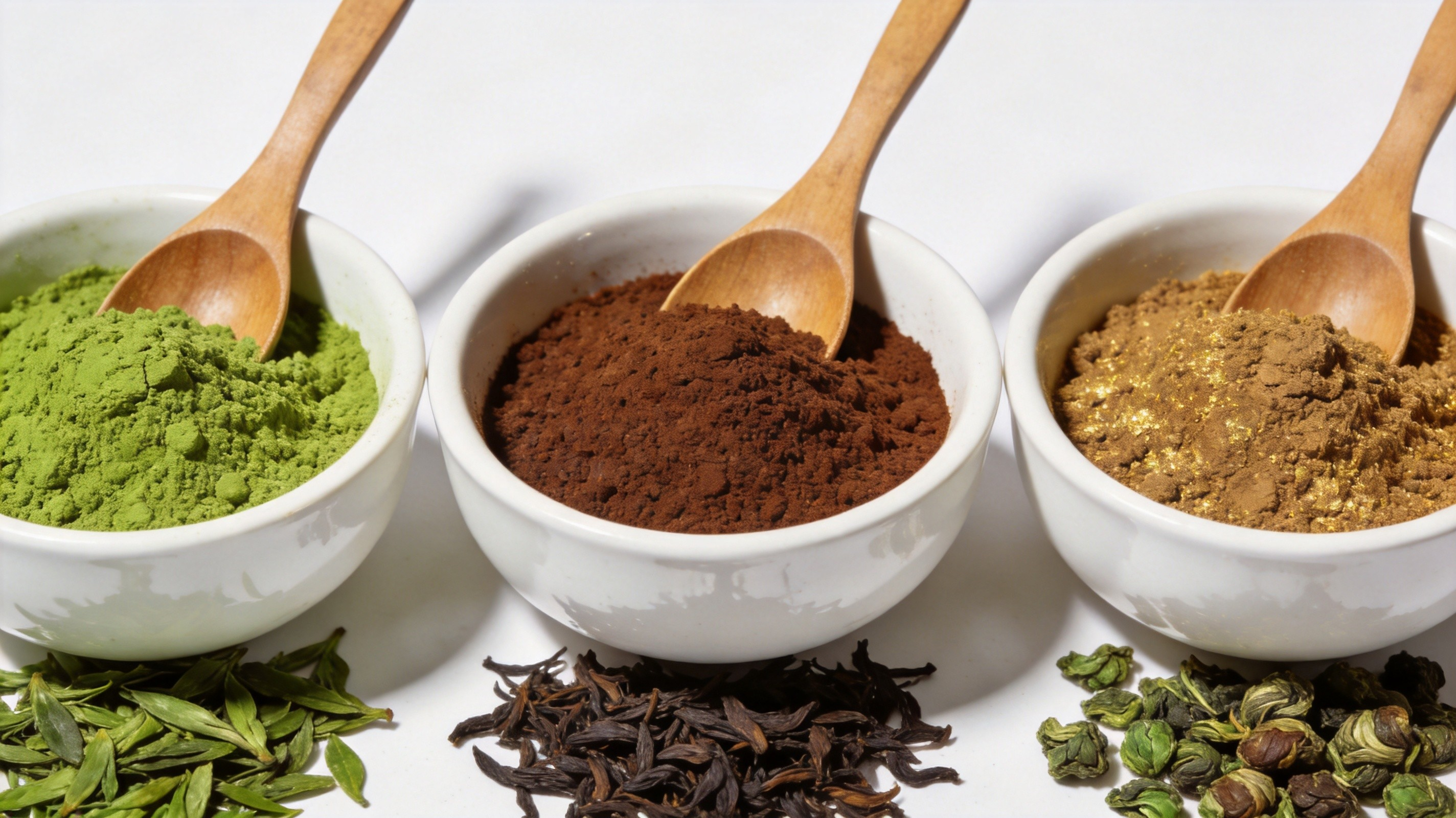
Figure 1: Natural Tea Powder Varieties
Introduction: The Rise of Tea Powder in Global Markets
Natural tea powder has emerged as one of the fastest-growing segments in the global beverage industry. Driven by health-conscious consumer preferences, convenience demand, and expanding applications across food and beverage sectors, the market is experiencing unprecedented growth. From traditional green tea and black tea to specialty varieties like oolong and matcha, tea powder offers versatility, shelf stability, and concentrated flavor profiles that appeal to both industrial B2B buyers and retail consumers.
Global Market Size & Growth Trajectory
The global instant tea market is experiencing remarkable expansion, projected to grow at a compound annual growth rate (CAGR) of 13.9% from 2025 to 2033, reaching USD 6.90 billion by 2033 from USD 2.70 billion in 2025 according to HTF MI Research [1]. This robust growth outpaces many other beverage categories, positioning tea powder as a key growth driver in the functional food and beverage landscape.
In China, the tea powder market reflects similar momentum. The Chinese tea powder industry reached an estimated market size of 53.8 billion RMB (approximately USD 7.5 billion) in 2026, representing year-over-year growth of 12.08% [2]. Meanwhile, the instant tea powder segment specifically is projected to reach 18.54 billion RMB in 2026, up 13.6% from 2025 [3].
Market Segment | 2026 Value | Growth Rate |
Global Instant Tea Market | USD 2.70 billion | CAGR 13.9% (2025-2033) |
China Tea Powder Industry | RMB 53.8 billion | +12.08% YoY |
China Instant Tea Powder | RMB 18.54 billion | +13.6% YoY |
Chinese Powdered Beverages (Total) | RMB 85-100 billion | 5-7% CAGR to 2035 |
Key Market Drivers
1. Health and Wellness Trend
Consumer demand for natural, plant-based ingredients with functional health benefits is the primary driver. Tea powder, particularly green tea powder rich in EGCG (epigallocatechin gallate) and L-theanine, is recognized for its antioxidant properties, metabolic support, and cognitive benefits [4]. The clean-label movement has further accelerated adoption, with consumers seeking minimally processed ingredients free from artificial additives.
2. Convenience and Versatility
The on-the-go lifestyle has boosted demand for instant, easy-to-use formats. Tea powder dissolves quickly in hot or cold water, making it ideal for busy consumers, office environments, and ready-to-drink (RTD) beverage production. Single-serve stick packs and pre-portioned sachets now account for over 55% of unit sales in urban centers [5].
3. Industrial and Foodservice Demand
B2B applications represent approximately 68% of the Chinese tea powder market [3]. New-style tea beverage brands, coffee chains, dessert manufacturers, and food processors rely on tea powder as a consistent, cost-effective ingredient. Applications span bubble tea bases, flavored coffee syrups, bakery ingredients, and functional food formulations.
Major Tea Powder Varieties
The tea powder market encompasses several key varieties, each with distinct characteristics and applications:
1. Green Tea Powder (including Matcha): Green tea powder, especially matcha, leads the market with 35.2% market share in China [3]. Matcha production in China reached 12,000 metric tons in 2025 and is projected to grow to 18,000 tons in 2026, with China now accounting for nearly 70% of global matcha production [6]. Green tea powder is prized for its vibrant color, grassy aroma, and high antioxidant content.
2. Black Tea Powder: Black tea powder represents approximately 20.1% of the market [3]. It is widely used in milk tea formulations, iced tea bases, and traditional hot tea applications. Its robust flavor profile and universal appeal make it a staple in both retail and industrial applications.
3. Oolong Tea Powder: Oolong tea powder is the fastest-growing segment, capturing 28.5% market share [3]. Its unique floral and fruity aroma profile has made it increasingly popular in premium tea beverages and specialty drink formulations. The distinctive flavor characteristics of oolong set it apart from both green and black tea varieties.
4. Specialty and Blended Powders: This category includes herbal teas, fruit-flavored tea powders, and functional blends. While smaller in aggregate share (16.2% [3]), this segment shows strong growth potential as brands innovate with unique flavor combinations and added functional ingredients like probiotics, vitamins, and adaptogens.
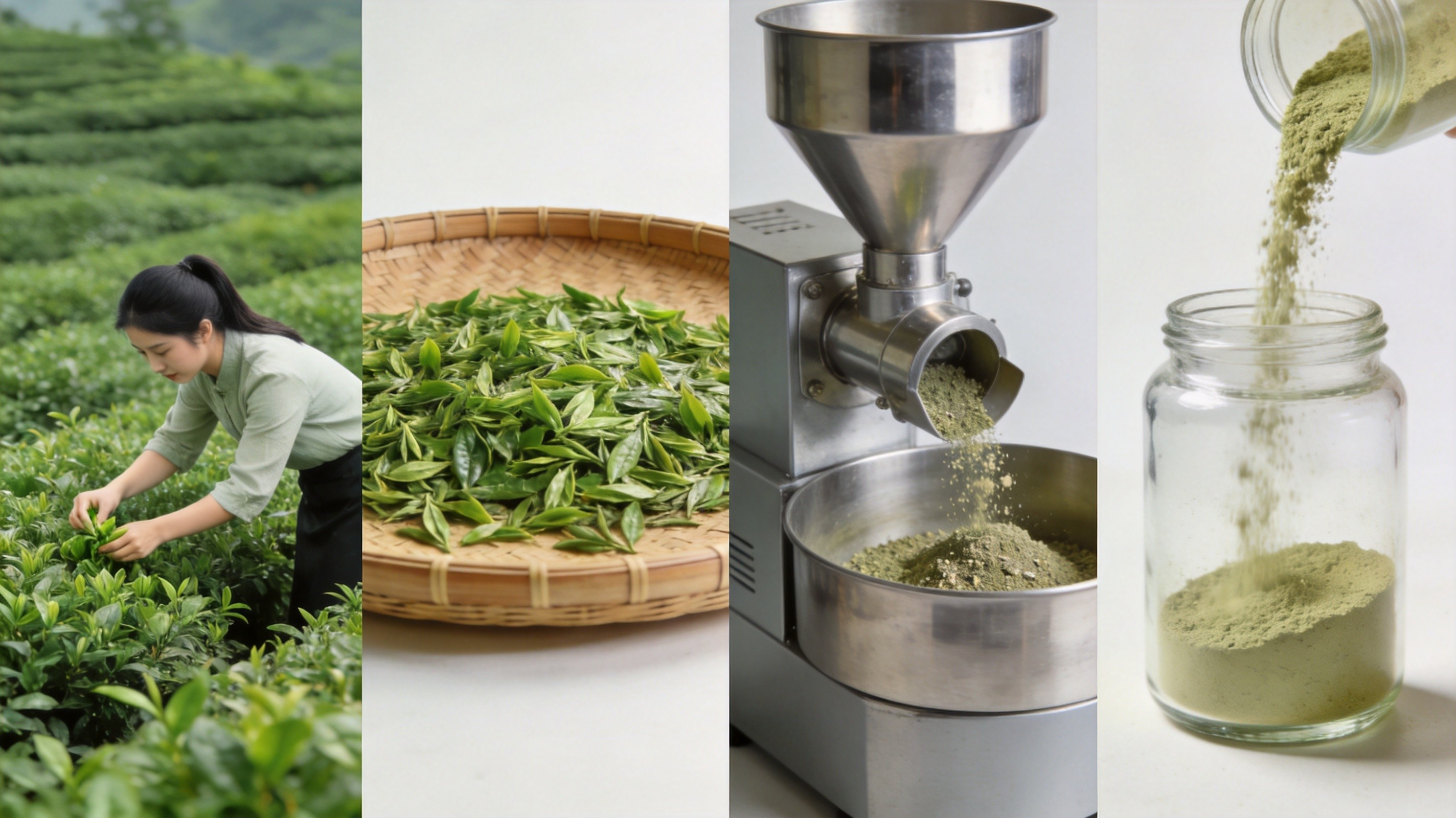
Figure 2: Tea Powder Production Process
Technological Advancements
The tea powder industry has seen significant technological innovation in recent years, particularly in processing techniques that preserve flavor, aroma, and nutritional content:
· Ultra-Fine Grinding: Advanced grinding technologies now enable particle sizes below 15 microns, improving solubility and mouthfeel while reducing sedimentation [2].
· Low-Temperature Processing: Vacuum freeze-drying and low-temperature spray drying methods preserve heat-sensitive compounds like tea polyphenols, with retention rates reaching 98% [2].
· Aroma Retention Technology: Innovative aroma capture and reinfusion processes maintain the volatile aromatic compounds that give tea its characteristic fragrance, significantly improving flavor authenticity.
· Nanocapsulation: Encapsulation techniques protect sensitive compounds, extend shelf life, and enable controlled release in functional applications [2].
Regional Market Insights
Asia-Pacific: Market Leader
The Asia-Pacific region dominates global tea powder production and consumption, driven by strong tea-drinking cultures in China, Japan, India, and Southeast Asia. China serves as both the largest manufacturing hub and a rapidly growing consumption center. Key production provinces include Guizhou and Zhejiang for matcha, with Hubei emerging as a fast-developing region [6].
North America and Europe: Growing Demand
North American and European markets are experiencing accelerated growth, fueled by increasing interest in functional beverages, plant-based products, and Asian-inspired flavors. The United Kingdom is identified as the dominating region in Europe, while Germany represents the fastest-growing market [7].
Emerging Markets
Latin America, the Middle East, and Africa are emerging markets with growing urban populations and changing lifestyles. China powdered beverage exports to these regions are expanding as distribution networks strengthen and consumer awareness increases [7].
Challenges and Opportunities
Key Challenges
· Regulatory Compliance: Stricter food safety standards, particularly pesticide residue limits and heavy metal content requirements (EU standards are especially stringent [6])
· Quality Consistency: Maintaining consistent flavor, color, and aroma across batches remains challenging due to natural variation in raw materials
· Supply Chain Vulnerability: Climate change affecting tea cultivation, raw material price fluctuations, and supply chain disruptions pose risks [7]
· Cost Pressure: Rising raw material costs (premium tea leaves) and investments in green manufacturing technologies impact profitability
Growth Opportunities
· Functional Tea Powder: Weight management, sleep improvement, and gut health segments growing at 20%+ annually [2]
· Premium and Organic Segments: High-margin organic certified products command significant price premiums
· Custom Formulations: B2B demand for bespoke tea powder blends tailored to specific beverage applications
· Sustainability Leadership: Green manufacturing, carbon footprint reduction, and ESG credentials create competitive advantages
Future Outlook 2026-2031
The tea powder industry is poised for continued robust growth through 2031, driven by several key trends:
· Market Expansion: The global instant tea market is projected to reach USD 6.90 billion by 2033, while Chinese tea powder production continues to scale to meet domestic and international demand [1, 6]
· Premiumization: Value growth will outpace volume growth as consumers trade up to higher-value functional and specialty products. Premium segments are expected to double their market share [5]
· Technological Integration: Automation, AI-driven quality control, and digital traceability will become standard in production facilities [2]
· Product Innovation: New formulations combining tea powder with functional ingredients like probiotics, adaptogens, and protein blends will expand application boundaries
Conclusion
Natural tea powder has evolved from a niche product to a mainstream ingredient category with global impact. The convergence of health trends, convenience demands, and technological advancements has created a favorable environment for sustained growth. For manufacturers, distributors, and B2B buyers, the tea powder market offers significant opportunities in premium and functional segments. However, success will require investment in quality control, regulatory compliance, and sustainable practices to capture value in this dynamic and competitive landscape. The next five years will be critical for establishing market positions and building differentiated capabilities that will define industry leaders.
References
5. [1] HTF MI Research. "Global Instant Tea Market Size, Share & Trends Analysis Report, 2025-2033."
6. [2] Book118. "2026 and Future 5 Years China Tea Powder Industry Market Panorama Assessment and Development Strategy Planning Report." May 20, 2026.
7. [3] Book118. "2026 and Future 5 Years China Instant Tea Powder Industry Market Research and Future Development Trend Forecast Report." May 21, 2026.
8. [4] MatchaLattes. "Matcha vs Coffee: Why 2026's Wellness Trend is Switching to Green Gold." May 4, 2026.
9. [5] IndexBox. "China Powdered Beverages Market Analysis, Forecast, Size, Trends and Insights." May 25, 2026.
10. [6] China Daily. "Thirst for matcha hikes production." June 1, 2026.
11. [7] OpenPR. "Instant Tea Market Is Booming So Rapidly." May 26, 2026.