
Natural Fruit Flavoring: Market Trends & Industry Insights
68
Introduction
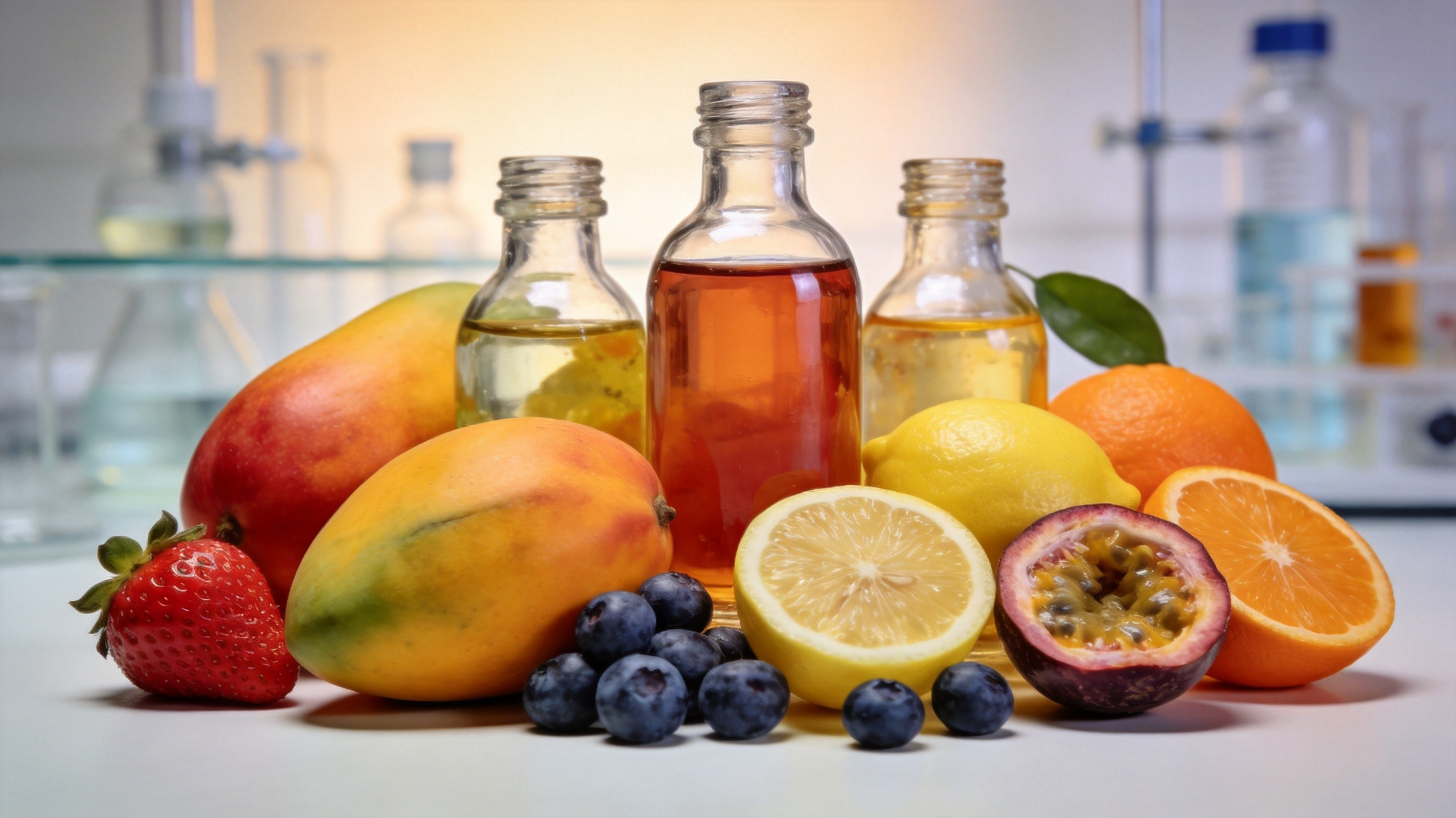
Natural fruit flavoring has become a cornerstone of the global food and beverage industry, driven by surging consumer demand for clean-label products with authentic, recognizable ingredients. As health-conscious consumers increasingly scrutinize ingredient lists, manufacturers are shifting from synthetic alternatives to naturally derived fruit extracts and essences. This report provides a comprehensive overview of the natural fruit flavoring market as of mid-2026, covering market size, segmentation, technology trends, regional dynamics, and strategic opportunities for industry participants.
Global Market Overview
The global natural flavoring and coloring market was valued at approximately USD 5.21 billion in 2024 and is projected to reach USD 6.17 billion by 2034, growing at a CAGR of 1.7% (Global Growth Insights, 2025). However, the broader natural flavor extract segment tells a more dynamic story—estimated at USD 24.42 billion in 2024 and forecast to reach USD 50.16 billion by 2035, expanding at a robust CAGR of 6.76% (Market Research Future, 2025). The global food flavors market as a whole reached USD 16.7 billion in 2025 and is expected to grow to USD 26.52 billion by 2034 at a CAGR of 5.39% (Fortune Business Insights, 2025).
Within this landscape, fruit flavors represent the largest single category, accounting for approximately 32% of total natural flavor demand. Citrus extracts alone constitute a significant sub-segment, with the global citrus extract market valued at USD 4.7 billion in 2025 and projected to reach USD 8.6 billion by 2036 at a CAGR of 5.7% (Fact.MR, 2025).
Market Segment | 2024/2025 Value | Projected Value | CAGR | Source |
Natural Flavoring & Coloring | USD 5.21B (2024) | USD 6.17B (2034) | 1.7% | Global Growth Insights |
Natural Flavor Extracts | USD 24.42B (2024) | USD 50.16B (2035) | 6.76% | Market Research Future |
Global Food Flavors | USD 16.7B (2025) | USD 26.52B (2034) | 5.39% | Fortune Business Insights |
Citrus Extracts | USD 4.7B (2025) | USD 8.6B (2036) | 5.7% | Fact.MR |
Key Segmentation Analysis
By Fruit Category
· Citrus Flavors (Orange, Lemon, Lime, Grapefruit): The dominant segment, accounting for ~28% of fruit flavoring demand. Citrus is favored for its versatility across beverages, confectionery, and savory applications.
· Berry Flavors (Strawberry, Blueberry, Raspberry): Growing at 7.2% CAGR, driven by the superfood trend and premiumization in dairy and dessert products.
· Tropical Flavors (Mango, Passion Fruit, Coconut): The fastest-growing sub-segment at 8.5% CAGR, fueled by exotic flavor exploration in beverages and ready-to-drink products.
· Stone Fruit & Orchard Flavors (Peach, Apple, Cherry): Stable demand at ~18% share, particularly strong in bakery and confectionery.
By Application
Application | Market Share | Growth Trend | Key Drivers |
Beverages | 29% | High Growth | Functional drinks, craft beverages, clean-label sodas |
Dairy & Frozen Desserts | 22% | Moderate Growth | Premium yogurts, plant-based dairy alternatives |
Bakery & Confectionery | 20% | Stable | Natural fruit fillings, flavored coatings |
Savory & Snacks | 15% | Emerging | Fruit-infused seasonings, snack flavoring |
Dietary Supplements | 8% | High Growth | Flavor masking, gummy vitamins |
Others | 6% | Moderate | Oral care, pet food |
Technology Trends
1. Advanced Extraction Technologies
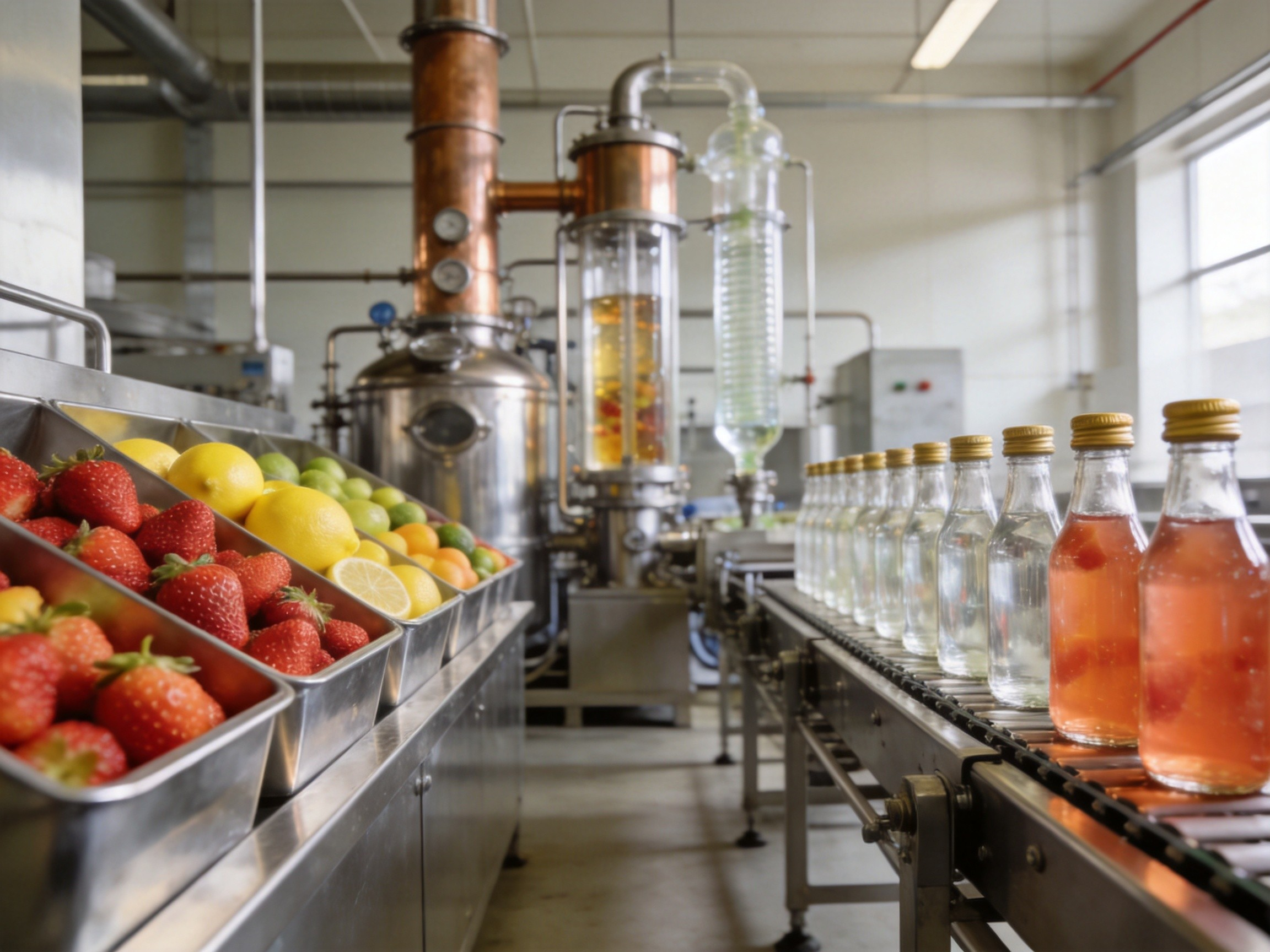
Supercritical CO₂ extraction has become the gold standard for premium natural fruit flavoring, achieving extraction efficiencies of 90–95% compared to 60–70% for traditional solvent-based methods. This technology preserves delicate volatile compounds, resulting in flavor profiles that more closely resemble fresh fruit. Cold-press and molecular distillation techniques are also gaining traction, particularly for citrus oils where thermal degradation is a concern.
2. Fermentation-Derived Natural Flavors
Precision fermentation is emerging as a game-changing technology, enabling the production of nature-identical fruit flavor compounds through microbial biosynthesis. This approach offers consistent quality, year-round supply stability, and a significantly lower environmental footprint compared to traditional agriculture-dependent sourcing. Companies like Givaudan and DSM-Firmenich have invested heavily in fermentation-derived flavor platforms since 2024.
3. Encapsulation & Delivery Systems
Microencapsulation technologies—spray drying, coacervation, and liposomal encapsulation—are enabling better flavor retention, controlled release, and extended shelf life. Nano-encapsulation is particularly promising for beverage applications where rapid flavor release upon consumption is critical.
Regional Market Analysis
Region | Market Share | Key Characteristics | Growth Outlook |
Asia-Pacific | 35% | Largest producer & consumer; strong tea & beverage culture | CAGR 7.5% — fastest growing |
North America | 34% | Clean-label premium; functional beverage boom | CAGR 6.2% |
Europe | 28% | Strict EU regulations; organic & natural demand | CAGR 5.8% |
Latin America | ~2% | Tropical fruit sourcing hub; domestic market emerging | CAGR 8.0% potential |
Middle East & Africa | ~1% | Growing beverage sector; import-dependent | CAGR 6.5% |
Consumer Trends & Market Drivers
· 71% of global consumers actively prefer products containing natural flavors over synthetic alternatives (NielsenIQ, 2025).
· 64% of food manufacturers have increased their use of natural flavoring ingredients since 2023 (Innova Market Insights).
· Clean-label claim penetration in new product launches reached 48% in 2025, up from 35% in 2020.
· The 'free-from' movement (no artificial colors, flavors, or preservatives) continues to be a primary purchase driver in North America and Europe.
· Functional beverages with natural fruit flavors are growing at 9.3% CAGR, outpacing conventional beverages.
Opportunities & Challenges
Opportunities
1. Beverage Innovation: The explosion of functional and craft beverages creates enormous demand for natural fruit flavor profiles that deliver authentic taste with clean labels.
2. Tropical & Exotic Flavors: Consumer willingness to explore new taste experiences opens premium pricing opportunities for tropical fruit flavoring (passion fruit, mango, guava).
3. Plant-Based Dairy Alternatives: Natural fruit flavors are essential for masking off-notes in oat, almond, and soy-based products while delivering appealing taste.
4. Emerging Markets: Asia-Pacific and Latin America offer high-growth potential with rising disposable incomes and westernization of food preferences.
Challenges
· Raw Material Volatility: Climate change and seasonal variability affect fruit crop yields, creating supply and pricing instability.
· Regulatory Complexity: Differing natural flavor definitions across FDA, EU, and JECFA create compliance challenges for global suppliers.
· Cost Premium: Natural fruit flavoring typically costs 3–5× more than synthetic alternatives, limiting adoption in price-sensitive segments.
· Shelf-Life Limitations: Natural flavors are generally less stable than synthetics, requiring advanced encapsulation and storage solutions.
Conclusion
The natural fruit flavoring industry stands at a pivotal inflection point. Consumer preference for authentic, clean-label ingredients continues to accelerate market growth, while technological advances in extraction, fermentation, and encapsulation are making natural flavors more accessible and cost-competitive. For suppliers and manufacturers who can navigate raw material volatility and regulatory complexity, the opportunities—particularly in beverages, tropical flavors, and emerging markets—are substantial. The market trajectory through 2035 points firmly toward natural as the new industry standard.
References
· Global Growth Insights (2025). Natural Food Flavors & Colors Market Report.
· Market Research Future (2025). Natural Flavor Extract Market — Global Forecast to 2035.
· Fortune Business Insights (2025). Food Flavors Market Size, Share & Industry Analysis.
· Fact.MR (2025). Citrus Extract Market — Global Industry Analysis.
· NielsenIQ (2025). Global Consumer Preference Survey — Clean Label Trends.
· Innova Market Insights (2025). New Product Development & Clean Label Penetration Report.
━━━━━━━━━━━━━━━━━━━━━━━━━━━━━━━━━━━━━━━━
Shanghai Javicen Industry Co., Ltd.
Email: javicen001@outlook.com | WhatsApp: +86 131 6706 8907
www.javicensyrup.com